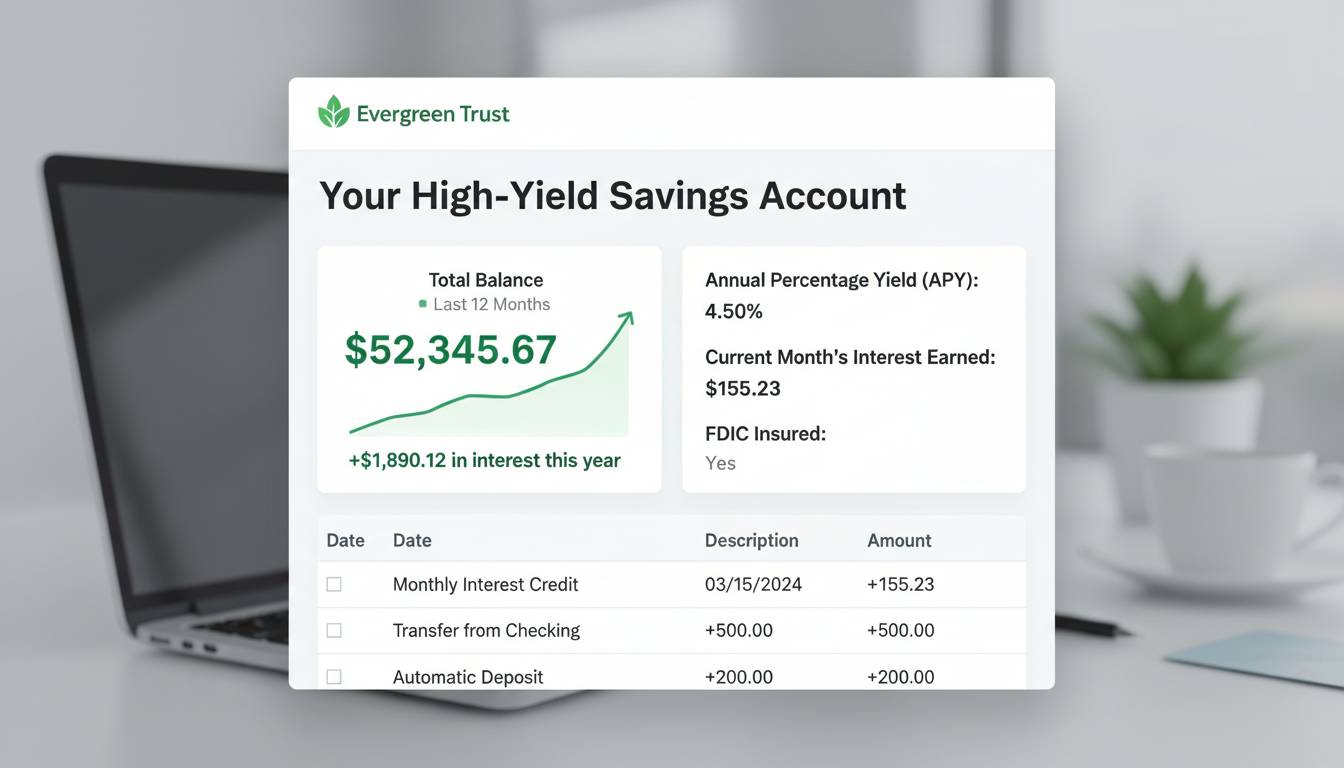
Interest rates have been bouncing around for a few years now, and a lot of people are wondering where to put their savings to actually get a decent return. High yield savings accounts have become the obvious answer—they pay way more than your typical brick-and-mortar bank while keeping your money accessible and safe. With banks fighting for your deposits, it pays to know what’s out there.
The Federal Reserve’s rate decisions over the past couple years have reshaped the savings landscape completely. If you haven’t looked at high yield options recently, you might be leaving hundreds of dollars on the table every year. This guide breaks down what’s available, what matters, and how to actually make your money work harder.
Understanding High Yield Savings Accounts
A high yield savings account is exactly what it sounds like—a savings account that pays more interest. Online banks and credit unions typically offer these because they don’t have the overhead of physical branches, so they can pass those savings to you in the form of higher APYs.
Right now, the best accounts are offering somewhere between 4.00% and 5.25%. The national average for regular savings sits around 0.45%, which is barely worth mentioning. That gap matters: $10,000 in a high yield account at 5% earns about $500 a year versus roughly $45 at a traditional bank. Over five years, that’s thousands of dollars of difference on the same money.
These accounts work just like regular savings when it comes to access. Your money is FDIC-insured up to $250,000, and you can make up to six withdrawals per month under federal rules. The main difference is just the number you see on your statement each month.
Top-Rated High Yield Savings Accounts
Plenty of online banks and credit unions are competing for your business right now. The big online names—Ally, Marcus, Discover—tend to lead on rates, often hovering around 4.50% to 5.00%. Some newer players or credit unions will occasionally pop above 5% to attract customers, though those promotional rates sometimes drop after a few months.
Credit unions can be worth looking into if you qualify for membership. Some have rates that beat the online banks, and you might get better customer service since they’re smaller. The catch is you usually need to meet some membership requirement—whether it’s living in a certain area, working for a particular employer, or joining a specific organization.
When you’re comparing accounts, don’t just look at the headline APY. Watch out for:
- Monthly fees (and how to avoid them—often just by keeping a minimum balance)
- Minimum deposit to open
- How easy the app or website is to use
- Whether you can get to your cash easily (transfers, ATM access)
What Affects the Rates
The federal funds rate set by the Federal Reserve is the main driver here. When the Fed raises rates, banks can afford to pay more on savings—they’re making more money on loans, so they compete for your deposits by offering better APYs. When rates go down, unfortunately, your savings rates tend to follow.
Banks also compete with each other. More institutions have jumped into the high yield space over the past few years, which has been good for consumers. That competition is partly why rates are as good as they are right now.
If you want to anticipate where rates might go, keep an eye on Fed policy announcements and economic indicators like inflation and employment numbers. But honestly, predicting exactly when rates will change is tough—even the “experts” get it wrong a lot.
Strategies for Maximizing Returns
Here are a few things that actually work:
Don’t get comfortable with one rate. Promotional rates often start high and drop after a few months. It’s worth checking every few months whether you’re still getting a competitive rate or whether it’s time to move.
Consider splitting your savings. You can open accounts at multiple banks to take advantage of different promotional rates, as long as you stay under $250,000 at each institution (the FDIC limit).
Set up automatic transfers. Treat your savings like a bill you have to pay. If the money moves automatically to a high yield account, you’re earning interest on it instead of letting it sit in checking at 0.01%.
Be willing to switch. Opening a new account and moving money online takes maybe 15 minutes. If another bank is offering 5.1% and you’re stuck at 4.5%, the math favors making the switch.
Conclusion
High yield savings accounts are worth having on your radar right now. The rates are significantly better than traditional banks, your money is safe, and you can still get to it when you need it. Whether you’re building an emergency fund or saving for something specific, putting that money in a high yield account rather than letting it stagnate in a low-interest account is a simple way to earn several hundred or thousand dollars a year with zero effort.
Just do your homework before you commit. Read the fine print on fees, check what the rate actually is (not just the promotional number), and make sure the institution is reputable. Then sit back and watch your interest compound.
Frequently Asked Questions
What is a high yield savings account?
It’s a savings account that pays a higher interest rate than standard banks. Online banks and credit unions usually offer them because they have lower operating costs.
How much can I earn?
It depends on the rate and your balance. At 5% APY, $10,000 earns about $500 per year. At the typical 0.45% banks charge, you’d earn around $45. The difference adds up fast.
Is my money safe?
Yes, if the institution is FDIC-insured (which almost all banks and credit unions are). Your deposits are protected up to $250,000 per account.
What’s required to open one?
Usually just be 18+, have a Social Security number, and meet the bank’s ID requirements. Many have no minimum deposit, though some require $100 or so to get started.
Do rates change?
Yes, most are variable and can go up or down with market conditions. Some have fixed promotional rates for a set period—read the terms to know what you’re getting.
How do I access my money?
Most banks let you transfer online or through their app. Some provide ATM cards. You’re limited to six withdrawals per month under federal rules, which is plenty for most people.